
The Reserve Bank in its first mid-quarter policy review on Monday kept the key interest rates unchanged because of elevated food inflation, rupee depreciation and uncertainty over foreign fund inflows.

Forex dealers said month-end dollar demand from oil importers and dollar's gain against other currencies overseas, also put pressure on the rupee.

The Nifty IT index, data shows, has outperformed the markets in each of the last four election years post the result. announcement.

India's forex reserves jumped $2.816 billion to $606.86 billion in the week ended December 8, the Reserve Bank of India (RBI) said on Friday. In the previous reporting week, the overall reserves had risen $6.11 billion to $604.04 billion. It can be noted that in October 2021, the country's forex kitty had reached an all-time high of $645 billion.

Among the Sensex firms, Kotak Mahindra Bank, Tata Steel, ITC, ICICI Bank, Bajaj Finserv, Maruti, Mahindra & Mahindra and State Bank of India were the biggest winners. Tata Consultancy Services, Infosys, HCL Technologies, Tech Mahindra, Asian Paints, Wipro and Tata Motors were the biggest laggards.

With the rupee continuing to remain weak against the US dollar, losses on diesel have climbed to Rs 9.45 per litre, upsetting the government's subsidy maths.

Foreign investors pumped in Rs 11,119 crore in the Indian equities in December, making it the second consecutive monthly inflow, despite increasing concerns over the re-emergence of Covid-19 cases in some parts of the world. However, foreign portfolio investors (FPIs) have turned cautious in recent days. The inflow in December was much lower compared to Rs 36,239 crore invested by FPIs in the month of November, data with the depositories showed.

The year 2013 marks the third worst year for the rupee against the dollar in 10 years.
In a wide-ranging interview with Abhineet Kumar, SCI chairman and managing director S Hajara discusses the problems facing the shipping industry.

'It is time to allow the rupee to move towards its true value, as it is hurting Indian exports, investment and SMEs associated with export sectors that create jobs,' argues Pravakar Sahoo.

The revised structure will help to keep airfares down, when airlines already face a triple challenge of rising crude oil prices, rupee depreciation and constrained airport capacity.

HCL was followed by Tech Mahindra, Asian Paints, Bharti Airtel, HDFC Bank, L&T, TCS, M&M, Nestle India and Infosys. NSE Nifty rose 23.75 points or 0.20 per cent to 11,896.80.
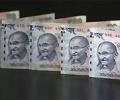
HCL Technologies and Infosys should benefit more than TCS and Wipro

Rajan's appointment will be perceived as a positive development.
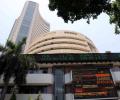
Markets across the world are increasingly turning volatile on concerns over the global economic impact of the coronavirus after China announced sharp increases in the number of people affected in the outbreak, analysts said.

Geo-political concerns over death of a Saudi journalist, Brexit and likely breach in Italy's budget also kept investors cautious.

HCL Tech was the top gainer in the Sensex pack, rising around 4 per cent, followed by Kotak Bank, Infosys, Reliance Industries, UltraTech Cement and Tech Mahindra. On the other hand, Titan, Sun Pharma, ICICI Bank, Axis Bank, SBI and Bajaj Finance were among the main laggards.

India's forex reserves jumped $9.11 billion to $615.97 billion in the week ended December 15 and the quantum of increase is one of the highest for a week, according to RBI data. In the previous reporting week, the overall reserves had risen $2.82 billion to $606.86 billion. In October 2021, the country's forex kitty reached an all-time high of $645 billion.
India's foreign exchange reserves increased $2.54 billion to $597.93 billion for the week ended November 24, the Reserve Bank said on Friday. In the previous reporting week, the overall reserves had jumped $5.08 billion to $595.4 billion. For the week ended November 24, the foreign currency assets, a major component of the reserves, increased $2.14 billion to $528.53 billion, as per the data from the Reserve Bank of India (RBI).
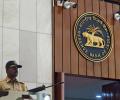
With economic activity still to reach pre-pandemic levels, the RBI may slow down the pace of rate hikes until next year to quell soaring inflation while supporting growth, the Asian Development Bank (ADB) says in its latest report. The Manila-based multilateral funding agency has raised the inflation forecast for the current fiscal year ending in March 2023 to 6.7 per cent from its earlier projection of 5.8 per cent. For the next fiscal year too, the forecast has been revised upwards to 5.8 per cent from 5 per cent earlier.
The recent depreciation of the rupee against the US dollar is unlikely to ensure better margins for exporters as buyers in Europe and the US, facing lower demand in their countries, are asking for hefty discounts.

Top losers in the Sensex pack included Tata Steel, Vedanta, Maruti, SBI, Coal India, Tata Motors, Sun Pharma, HUL, RIL, IndusInd Bank, Axis Bank, HDFC duo, ICICI Bank, M&M, Kotak Bank, and Infosys, falling up to 2.89 per cent.

Maruti was the top loser in the Sensex pack, shedding around 3 per cent, followed by L&T, IndusInd Bank, Axis Bank, ONGC, Reliance Industries, Asian Paints and HDFC. On the other hand, HCL Tech, TCS, Sun Pharma and Tech Mahindra were among the gainers.

HUL was the top gainer in the Sensex pack, rising around 2 per cent, followed by TCS, ITC, Asian Paints, HDFC, HCL Tech and Nestle India.

India's forex reserves increased by $5.08 billion to $595.4 billion during the week ended November 17, the Reserve Bank said on Friday. In the previous reporting week, the kitty declined $462 million to $590.32 billion. For the week ended November 17, the foreign currency assets, a major component of the reserves, increased $4.39 billion to $526.39 billion, according to the Weekly Statistical Supplement released by the Reserve Bank of India (RBI).
Realisation due to a strengthening dollar exceeds the losses inflicted by export duty hike.
The onus rests on the government to help industry take advantage of depreciation.
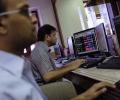
M&M was the top gainer in the Sensex pack, rallying around 6 per cent, followed by PowerGrid, Tata Steel, IndusInd Bank, Reliance Industries, HCL Tech, ONGC and Infosys. On the other hand, Bajaj Auto, Asian Paints, Sun Pharma, HDFC and Nestle India were among the laggards.
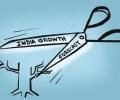
The biggest risk to India's growth outlook is an escalation of geopolitical tensions, especially if these tensions spread to the Asian region, RBI Monetary Policy Committee (MPC) member Jayanth R Varma said on Wednesday. Varma, in an interview to PTI, said that inflation and inflationary expectations appear to be moderating and high inflation will certainly not become the 'norm' in the country. He is cautiously optimistic about the Indian economy as after the pandemic abated, consumption demand has begun to recover though the recovery is uneven across sectors and industries.

Travel from India increased significantly after resumption of direct flights in March, Turkiye Tourism Board said, with destination weddings contributing to arrivals
Bosch Ltd, a supplier of automotive components to original equipment makers, has reported 69.4 per cent drop in net profit to Rs 49.3 crore for its first quarter ended March 2009, compared with the corresponding quarter last year. Its net sales for the quarter dropped 20.6 per cent to Rs 991.6 crore.
India's forex kitty decreased by $462 million to $590.32 billion for the week ended November 10, the Reserve Bank said on Friday. In the previous reporting week, the overall reserves had increased by $4.67 billion to $590.78 billion. In October 2021, the country's forex kitty had reached an all-time high of $645 billio
.jpg)
While cost pressures could partly offset the expected gains, given the currency hedging by companies the gains will not accrue immediately.
The Indian rupee has fallen by almost 11 per cent since August 1, thanks to rising risk aversion.
The Indian textile industry, hit hard by recession in the United States and the European Union, said a steep 20 per cent rupee depreciation and the Rs 1,400-crore (Rs 14 billion) package has not helped in boosting sagging exports and demanded that the government should do more to help it come out of the woods.

Domestic air passenger traffic grew 5.1 per cent year-on-year to an estimated 138.9 million in May and was significantly higher by around 14 per cent than pre-Covid levels, credit ratings agency Icra said on Thursday. Icra also said the outlook on the Indian aviation industry is stable amid the continued recovery in domestic and international air passenger traffic with a relatively stable cost environment and expectations of the trend continuing in FY2025.
To tide over fund crunch, students are either looking at alternative sources of funding like scholarships or picking up part-time jobs.
.jpg)
The depreciation of the rupee, it said, reflects the wider CAD as well as lower net capital inflows.
Rupee has depreciated 8 per cent against the US dollar since beginning May'13.
There were also concerns over whether a depreciating rupee would increase the fiscal deficit by increasing expenditure on subsidies and jeopardise the repayment schedule for external commercial borrowings.
